Responsible AI in marketing: smarter, faster, riskier?
AI is transforming marketing, but it isn’t risk-free
AI has already reshaped much of the marketing landscape. We’re seeing a clear shift towards AI-led campaign optimisation, predictive targeting, and more dynamic customer experiences. But the biggest change is still ahead of us, as AI becomes embedded in every tool we use and influences every channel, touchpoint, and stage of the marketing journey. For most teams, the priority is responsible AI in marketing – getting the benefits without increasing risk.
We all recognise the benefits that AI brings. Personalisation at scale, smarter use of time, deeper insight into data, real-time optimisation, and improved customer experience. But AI isn’t without its challenges. Marketing teams need to understand the potential risks, and what they can put in place to stay ahead of them.
Some of the key risk areas to consider
As AI takes on a bigger role in marketing, it’s important to recognise not just the opportunities it brings, but also the risks that accompany greater automation and machine-led decision-making. Understanding these challenges early helps teams to stay proactive rather than reactive, protecting both performance and brand integrity. The following section outlines some of the core risk areas marketers should be aware of. This is not a complete list, but a useful starting point to guide responsible AI adoption.
Managing compliance risks in AI-driven marketing
As AI becomes embedded in more marketing tools, it can create compliance pitfalls that aren’t always obvious at first glance. This is where responsible AI in marketing needs clear boundaries on data use and approvals.
Key risks to watch for:
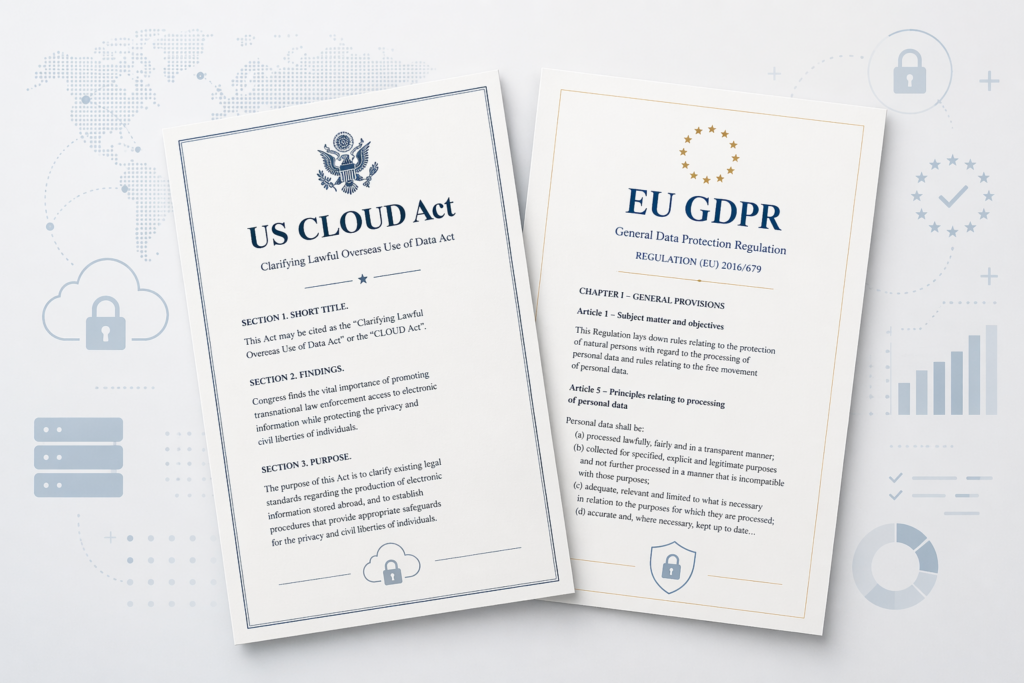
- AI using personal or sensitive data in ways that inadvertently breach GDPR or enable unlawful targeting.
- AI-generated claims or copy that falls outside regulatory guidelines, especially in tightly regulated sectors.
- Limited transparency and potential data leakage when customer information is used in open or public AI systems.
Maintaining brand identity in automated content
As AI takes on more content creation, it becomes easier for brand voice, tone, and personality to drift or become diluted. Without the right structures and guidance in place, automated outputs can quickly erode the distinctive identity teams have spent years building.
Key risks to watch for:
- AI defaulting to generic or overly safe language that makes your brand sound like everyone else.
- AI-generated content may strip out the warmth, nuance, and personality that define your brand.
- Tone can drift across teams and channels when AI tools or prompting styles are used inconsistently.
- AI altering or inventing information, including User Generated Content, which undermines authenticity and trust.
Managing fairness risks in AI-led targeting
AI targeting is only as fair as the data it learns from. When past campaigns or behavioural patterns contain bias, AI can unintentionally repeat or even amplify those skews, creating legal, ethical, and reputational risks for brands.
Key risks to watch for:
- AI repeating or amplifying biased patterns from historical campaign or customer data.
- Certain demographic groups being over-targeted or excluded because the model prioritises people who respond most quickly or frequently.
- AI-generated messaging unintentionally reflecting stereotypes or making decisions that can’t be easily explained or justified.
Protecting marketing expertise in an AI-first world
As AI takes on more of the day-to-day execution and optimisation, there’s a growing risk that human expertise becomes diluted. When teams lean too heavily on automated decisions, they can lose the context, critical thinking, and troubleshooting skills needed to challenge AI outputs, understand what’s truly driving performance, or step in when things go wrong.
Key risks to watch for:
- AI overlooking real-world factors, such as stock levels, seasonality, external events, or operational constraints, that marketers instinctively consider.
- Conflicting or unaligned decisions when different AI systems (CRM, paid media, personalisation) optimise independently toward competing goals.
- Erosion of channel knowledge, analytical thinking, and diagnostic ability as teams rely more on automation and less on their own judgement.
Maintaining customer trust in AI-enabled interactions
As AI becomes more prominent in customer interactions, people are quicker to notice when something feels automated or impersonal. When that happens, the sense of human connection can drop, taking trust and loyalty with it.
Key risks to watch for:
- Automated content, chatbots, or synthetic voices that feel generic, robotic, or insincere.
- A loss of the human warmth and creativity that helps customers emotionally connect with a brand.
- Customers feeling misled if AI involvement is hidden or presented as human-created.
Reducing risk with responsible AI in marketing
Having explored the core risks that come with increased automation, the next step is understanding how to manage them effectively. The following themes outline practical ways to reduce those risks and ensure AI is used responsibly across your marketing activity. These aren’t the only actions available, but they provide a strong foundation for teams looking to adopt AI in a safe and structured way.
Maintaining meaningful human involvement in AI-driven marketing
As AI takes on more execution and decision-making, teams still need to apply judgement and context to ensure outputs stay accurate, on-brand, and aligned with real-world conditions. These actions help keep people meaningfully involved where it matters most.
- Review AI outputs before launch to catch compliance issues, tone drift, or inaccuracies the system may miss.
- Sense-check recommendations against real-world context, such as stock, promotions, news or operational constraints.
- Build confidence in when to trust (and when to question) AI, so teams can challenge decisions constructively.
- Use AI to support decision-making rather than replace it, encouraging teams to interrogate outputs rather than accept them at face value.
- Ensure customers can access real human support where empathy or judgement is needed.
Strengthening governance and compliance in AI-driven marketing
With AI embedded in more tools, strong governance ensures decisions are transparent, compliant, and aligned to clear standards. These steps help teams stay in control of how AI is used and minimise compliance risks.
- Introduce legal and compliance signoff for higher-risk campaigns so sensitive activity is reviewed before launch.
- Use AI tools with robust compliance controls, disabling risky features such as inferred attributes or predictive audiences when appropriate.
- Restrict the data that AI systems can access so tools only use what is necessary and do not inadvertently process personal or sensitive information.
- Document how decisions are being made, including the signals and logic used in segmentation or optimisation, to support transparency and auditability.
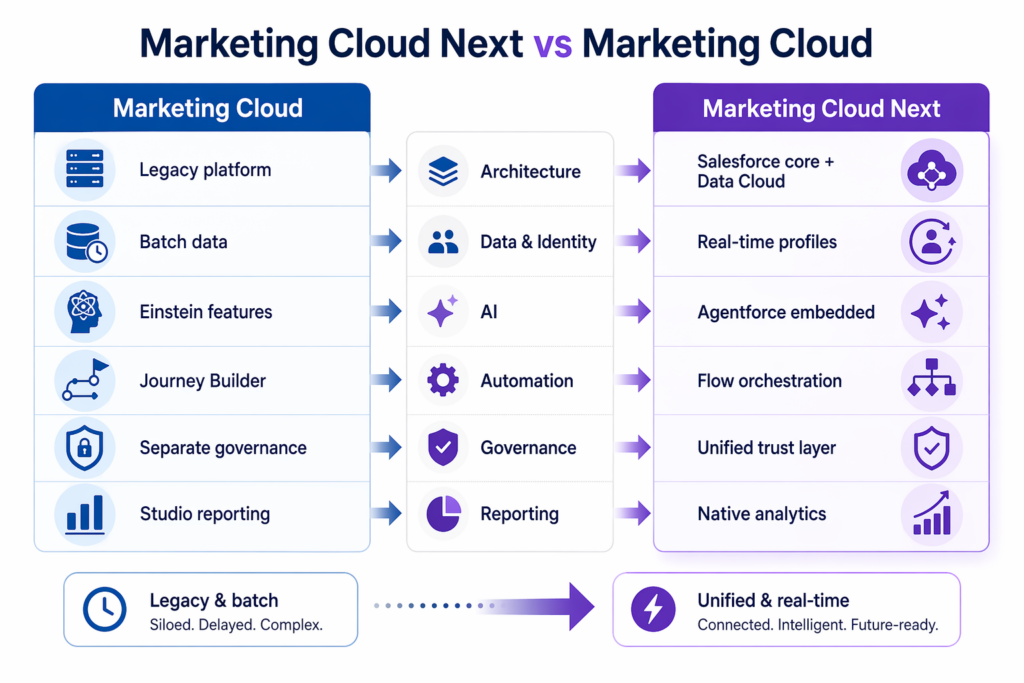
- Ensure AI systems work together coherently to avoid conflicting optimisation across CRM, paid media, and personalisation platforms.
Protecting brand voice and customer trust in an AI-led world
AI can speed up content and customer interactions, but it also increases the risk of sounding inconsistent or inauthentic. These actions help ensure automation supports your brand identity and protects customer trust.
- Review AI-generated content before use to ensure it reflects your brand’s tone, avoids generic phrasing, and maintains the warmth and personality customers recognise.
- Use approved prompts, examples, and fact-checked inputs so AI draws from accurate, on-brand material rather than guessing or inventing details.
- Monitor for inconsistencies across teams and channels, ensuring AI tools and prompt styles aren’t unintentionally creating tone drift or mixed messaging.
- Be transparent about where AI is used, so customers don’t feel misled or unsure whether they’re interacting with a person or a system.
- Provide real human support when situations require empathy, ensuring customers can reach someone who understands nuance, emotion, and context.
Removing bias and improving fairness in AI-driven marketing
AI can unintentionally repeat or amplify skewed patterns in historical data, which can affect who is targeted and how messages are framed. These actions help ensure AI-driven decisions remain fair, inclusive, and aligned with both customer expectations and regulatory standards.
- Audit and clean historical datasets before using them with AI to prevent past skew, stereotypes, or imbalances from influencing future targeting or messaging.
- Use diverse examples when training or prompting AI, helping the system learn from more representative content rather than reinforcing narrow patterns.
- Review AI-generated audiences and messaging for potential bias, ensuring campaigns don’t unintentionally exclude, over-target, or misrepresent specific groups.
- Monitor performance regularly to spot unusual patterns or demographic skews in who is being reached or responding.
- Document how segmentation and optimisation decisions are made, so any fairness concerns can be clearly traced and addressed.
Building skills and capabilities for an AI-led marketing world
As AI takes on more of the execution, marketers risk losing confidence in the fundamentals that underpin good decision-making. These steps help ensure teams continue developing the skills needed to interpret AI outputs, challenge recommendations, and troubleshoot performance issues effectively.
- Create structured training programmes on marketing fundamentals so teams keep core channel knowledge alive even as automation increases.
- Encourage AI-assisted, not AI-led workflows so teams stay hands-on and actively review, refine, and question AI outputs.
- Encourage teams to discuss the reasons behind performance outcomes, helping build deeper analytical skills.
- Develop troubleshooting guides so teams can identify issues in AI-driven campaigns and intervene confidently when performance drops.
Integrating tools and processes across the marketing ecosystem
With multiple platforms now using their own AI systems, it’s easy for decisions to become fragmented or conflicting across channels. These actions help ensure tools work together coherently, supporting consistent optimisation and reducing operational friction.
- Align CRM, paid media, and personalisation platforms, ensuring separate AI systems aren’t competing for the same customers or driving contradictory optimisation decisions.
- Standardise processes and ways of working across teams, so AI-assisted workflows, prompting approaches, and approval steps don’t vary unnecessarily between channels.
- Document how each platform makes decisions including the signals and logic used for targeting or optimisation, so teams understand how systems interact and can resolve conflicts quickly.
- Test changes at a small scale before rolling out, validating how new AI features or cross-platform integrations behave in practice to avoid unintended downstream effects.
Putting responsible AI into practice
Bringing these themes together, there are several practical steps teams can take now to embed responsible AI into everyday marketing operations.
- Introduce clear guidelines for how AI should be used, giving teams clarity on where automation supports work and where human judgement remains essential.
- Develop a centralised prompt library so AI usage remains consistent and aligned with brand voice.
- Build structured training and upskilling programmes to strengthen both marketing fundamentals and AI literacy.
- Ensure cross-functional teams (CRM, paid media, personalisation, legal/compliance) are aligned on shared standards and processes.
- Test AI recommendations on a small scale before rolling out, validating how tools perform in real-world scenarios.
The future of marketing is human-led and AI-enabled
AI has the potential to make marketing smarter, faster, and more effective – but only when it’s used to support people, not replace them. Human judgement, creativity, and contextual thinking remain essential to ensuring decisions are accurate, fair, and aligned with brand values. The organisations that benefit most from AI will be the ones that adopt it responsibly: with clear governance, strong collaboration, defined workflows and the confidence to question automated outputs. By treating AI as a tool within a structured framework, not as a standalone strategy, marketing teams can unlock its advantages while safeguarding the trust, expertise and integrity that sets successful brands apart. Ultimately, responsible AI in marketing is a operating model choice as much as a technology choice.
Like what you see?
Subscribe to our newsletter for customer experience thought leadership and marketing tips and tricks.